Peninsula HR

Peninsula HR and Health & Safety at Work

Call now 0800 459 907

For an affordable fixed fee, you have unlimited 24/7 access to expert advice for HR and HSW challenges. We create tailored policies, contracts and documentation, provide insights on disciplinary action, performance management, redundancies and termination.

Should you face a HR or HSW claim, our exclusive financial product, Peninsula Protect, provides legal liability and defence costs of up to $400,000 per claim.

Simplify employee management and save time with our award-winning Bright HR software. While our Employee Assistance Program (EAP) offers your staff and their family a professional mental health counselling service.

Call now 0800 459 907
Woman with a headset on a sales call

How Peninsula supports your business

Services designed for all New Zealand businesses

Human Resources

We're helping 30,500 business owners just like you across New Zealand and Australia with their most difficult and time-consuming HR and employee relations challenges.

Join them and you'll enjoy:

  • Unlimited expert advice and insights through our 24/7 advice line. Giving you the support you need, anytime you need it
  • Tailored employee contracts and documentation services, HR policies, employee handbooks, and more
  • Claims representation and counsel for employee claims
  • Online HR management software
work colleagues looking at a laptop in a warehouse

Health and Safety

Every New Zealand employer wants to create a safe workplace for all their employees to avoid staff injuries and accident claims. The Peninsula team can provide you the information you need to create an employee-focused safe and healthy workplace.

Here's how Peninsula makes that easier for you:

  • Unlimited Health and Safety advice available 24/7
  • Professional Health and Safety risk assessments to identify gaps and offer insights on creating a safer work environment
  • Smart and intuitive Health and Safety software designed to help you save time and streamline incident reporting
Man and woman wearing safety gear working in a warehouse

HR and Health & Safety package

The experienced team at Peninsula New Zealand can develop a tailored HR and Health and Safety package designed around the unique needs of your business.

This includes:

  • Assessment of employment contracts and policies, and create required documentation tailored for your business and industry sector
  • Unlimited access to our 24/7 helpline for expert advice and insights to help you deal with a crisis
  • Health and Safety risk assessments to help you create a safer work environment
  • Access to employee management software, BrightHR
Call now 0800 459 907
Woman writing on a notepad in a warehouse

Helping employers like you for over 40 years

Thousands of small and medium sized business owners have chosen Peninsula for HR and Health & Safety support. Discover what they have to say.

"My experience with Peninsula has been great. The documentation provided has really improved our Health and Safety systems and taken us to a higher level."

8 employees Transport and Logistics

GCA Logistics New Zealand

Olivia Allan, Business Improvement Lead
GCA Logistics Limited

"The MAD MEDIA management greatly appreciated Peninsula's support during a restructure. It was reassuring to know we were doing "the right thing" by New Zealand law. We highly recommend Peninsula to SMEs that don't have an in-house HR specialist."

5 employees Office

Client Logo

Jacques Schoeman, Director
Mad Media Ltd

"We have been a Peninsula client for over 5 years. The team is friendly, professional and helpful. As a Practice Manager you face issues that need professional advice. That's where Peninsula played a role in solving my issues. Thank you team."

9 employees Healthcare & Medical

Client Logo

Dyllis Williamson, Practice Manager
ProHealth Family Medical Centre

"It has been awesome to work with Peninsula, the team has helped me immensely with getting to know the system and how to navigate our Health and Safety. "

2 employees Construction

Client Logo

Conrad Reynecke, Director
Cali Comfort Solutions

"Not any manager can be an HR manager. Peninsula, they have a technical support team 24/7. They know the regulations, they know the updated policies and procedures. So, why not?"

20 employees Veterinary Care

Client Logo

Mudher Alrahmani, Practice Manager
Vets for Pets

Create a safer work environment for all your employees

A Peninsula SafeCheck review helps identify and reduce potential risks and hazards that could cause a significant injury to your team.

Arrange your free safecheck review

Get a Free Peninsula SafeCheck review valued at $995

Got a question? We've got answers

Still unsure or have more questions? Contact our team today for a free consultation call.

CTA Background

Try Peninsula New Zealand today.

Find out what 6,500+ businesses across NZ have already discovered. Get round-the-clock HR and Health & Safety support with Peninsula.

Trending Resources

Explore Popular HR and Health & Safety Insights from Peninsula Experts

Blog

Pay Secrecy Clauses Are No Longer Enforceable in New Zealand

Pay secrecy clauses, which prevent employees from discussing or revealing their salary, wages, bonuses and other financial benefits, have previously been enforceable in New Zealand. These clauses, which were commonly included in employment agreements, allowed an employer to, for example, take disciplinary action if an employee told another employee what their hourly wage was. From 26 August 2025, these clauses are no longer enforceable. The Employment Relations Act 2000 (the Act) now provides protection for employees who discuss, disclose or enquire about their or other employees’ remuneration. In a nutshell, the simple objective of the Act is to allow employees to talk about their own pay if they want to, making it safe for employees to share their own information with colleagues and with family. How are employees protected? The Act now includes a new ground for a personal grievance. This ground arises where the employer engages in adverse conduct in respect of an employee, because the employee disclosed their pay or remuneration. This includes where an employee enquired about, or discussed, another employee’s pay. Examples of adverse conduct would include the employer disciplining or terminating an employee, forcing them to retire or resign or deliberately providing them with less favourable terms of employment if they discuss renumeration. To successfully raise a personal grievance, employees must demonstrate that: • Adverse conduct occurred; and • That a ‘remuneration disclosure reason’ was a significant reason for the employer’s adverse conduct. This means showing that the employer took the adverse action because an employee discussed their remuneration with any other person. It even covers the situation where an employee discussed their pay but did not actually say the amount they are earning and where the employee had discussions with people outside the workplace. What is ‘remuneration’? “Remuneration” in this context includes the following: salary or wages (including payment for overtime and penal rates) allowances productivity-based bonus or incentive payments (including commission) any employer contribution to a superannuation scheme for the benefit of the employee any other type of payment for work. Any payment made to an employee as an owner of the business is excluded from the term “remuneration”. What do I do if I have a pay secrecy clause in my current staff agreements? Understand that, from 26 August 2025, these clauses cannot be enforced by employers. Any adverse action taken against an employee for breach of such a clause would be considered unlawful. The same would apply to any other mechanism, such as a policy or management instruction, aimed at achieving pay secrecy. While you’re not obligated to formally vary these existing agreements, you need to recognise the clause has been rendered unenforceable, and best practise would be to promptly remove them from agreements moving forward. Business impact Some employers are concerned that the ban on pay secrecy will create tension in the workplace when employees are free to compare their pay and benefits, without understanding the context and reasons for these differences. Provided that the pay discrepancies are not based on a prohibited ground of discrimination (such as gender or race), the employer and employee are free to negotiate their employees pay, which can be based on many factors such as market conditions, employee experience, skills and qualifications. Can an employee refuse to discuss their remuneration with others? If asked, an employee can still refuse to discuss their pay and keep it confidential if they so choose. The Act makes it clear that an employee’s pay is their own business and it's their decision if they want to share it with others. Employer’s duty of confidentiality not affected The employer retains their duty of confidentiality with regard to employee information and should not disclose an employee’s pay to others. As a leading workplace relations specialist, Peninsula can assist with any queries you may have surrounding employment agreements and pay secrecy. Contact us today.


Blog

Mental Health Support in NZ Workplaces: Awareness Grows, Action Needed

Mental health is gaining visibility in New Zealand workplaces, but new research from Peninsula Group reveals a gap between rising employee needs and the support currently offered. In a global survey of over 79,000 small to medium-sized businesses, 30% of New Zealand employers reported an increase in mental health-related sick leave, while 52% observed more staff facing mental health challenges. Despite this, 73% of employers said they do not offer dedicated mental health days—and have no plans to introduce them within the next year. Kayleigh Frost, Associate Director of Operations at Wisdom Wellbeing ANZ, Peninsula New Zealand’s EAP services provider, says the data reflects a shift in employee openness, but also highlights the need for stronger support systems. “We’re seeing more honesty around mental health, which is encouraging,” she said. “But there’s still a long way to go. Even small steps, like basic manager training, can make a big difference.” Currently, only 25% of New Zealand employers offer an Employee Assistance Program, and just 28% have introduced new wellbeing measures in the past year. A concerning 77% of employers are not confident their staff would feel safe disclosing mental health issues—suggesting stigma remains a barrier. Compared to countries like Canada, where mental health initiatives are more widely adopted, New Zealand businesses have room to grow. Frost emphasizes that effective support doesn’t need to be complex or expensive. “Support needs to be accessible and meaningful, not a tick-the-box exercise,” she said. With poor mental health costing New Zealand employers an estimated $1.3 billion annually, the case for action is clear. As awareness continues to rise, the challenge now is turning that awareness into tangible, consistent support for employees. Click here to read the full press release. Click here to read the full whitepaper and see how mental health support in New Zealand workplace compares to other countries.

Blog

Two of the Most Common Personal Grievances Explained

A personal grievance is a procedure for an employee (or ex-employee) to challenge dismissals or treatment they consider to be unfair. A personal grievance is raised if the employee has made it reasonably clear in enough detail to their employer that they have a complaint they want addressed. Two common types of complaints that can be raised by bringing a personal grievance are unjustified dismissal and unjustified disadvantage. Unjustified dismissal An employer should only dismiss an employee on reasonable grounds and after a fair process. An employee may be able to lodge a personal grievance claim if an employer does not do the following when terminating their employment: Act in good faith Acting in good faith means both the employer and employee should be honest, fair and transparent in their dealings with each other. They should listen to one another and respond appropriately in a timely manner. Have a good reason A good reason for dismissal must be genuine and reflect what a fair and reasonable employer could have done at the time of the dismissal in the circumstances. Examples of good reasons include serious or repeated misconduct. Follow a fair and reasonable process Procedural fairness is equally important – an employer should fully investigate any concerns and then raise them with the employee allowing a reasonable time to respond. The Employee must be given the opportunity to seek independent advice and have a representative or support person present if they prefer. The employer should carefully and genuinely consider the employee’s responses with an open mind and take into account any extenuating circumstances before making a decision. Make sure the outcome is not pre-determined You must be able to prove, as the result of a complete and fairly conducted investigation, that you were justified in believing the misconduct occurred and that termination is a fair and reasonable outcome in the circumstances. Try to avoid bending the process and facts to meet a certain outcome. Unjustified disadvantage Employers must not do something that affects an employee’s employment in a way that disadvantages them or affects their ability to do their job. Examples of employees who have been ‘disadvantaged’ may include employees who have: been given a warning, suspended , or demoted, had hours of work or pay changed without consultation, been underpaid, been misled by their employer, not had the opportunity to respond to allegations against them, not had a safe workplace, or not been informed about proposals which may affect their employment. A personal grievance claiming unjustified disadvantage generally concerns something an employee is entitled to under their employment agreement. An employer needs to ensure the actions they took are reasonable and justifiable in the circumstances. BrightHR Software can help you keep track of your employees’ working hours, and corresponding pay and entitlement, by monitoring absences and shift schedules as employees clock in and out with Blip. Blip sends reminders to, and notifications from employees in respect of clocking on and off so you can track time and location. It also allows employees to log breaks. You can then generate a report that will show the number of shifts and hours worked, breaks and their duration and the total number of hours worked excluding those breaks to help with payments. How Peninsula can help you Peninsula may be able to assist you if you are currently subject to an unjustifiable dismissal, unjustified disadvantage or other type of personal grievance claim, and assist you in shoring up your business’ policies and processes to better protect your business and your people in the event of any future personal grievance claim.

Bright HR logo

Time-saving HR Software

Streamline your workload with New Zealand's favourite online Health & Safety and HR software. Designed with heaps of clever tools and features to free up your time - it's all part of your Peninsula service.

Call now 0800 459 907
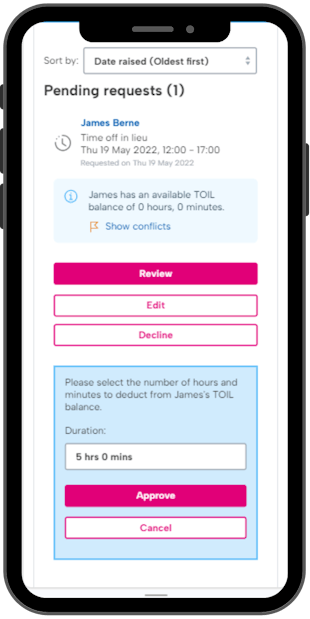
Manage staff absences in the BrightHR app
Slide Icon
Manage staff absence online

Accept, reject, and track holiday requests in a click.

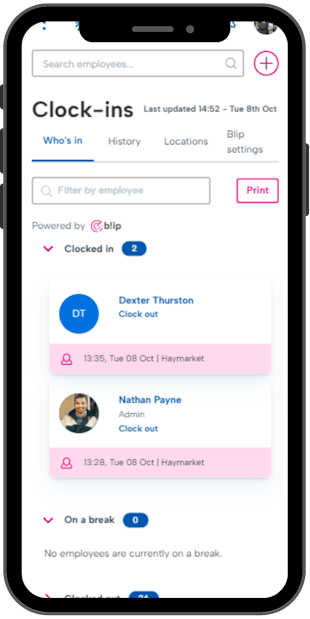
Track your team's hours online
Slide Icon
Track your team's hours

Be across clicking in, overtime and expenses.

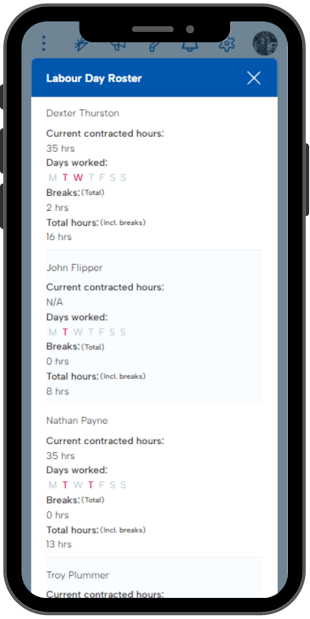
Track and schedule employee shifts
Slide Icon
Schedule shifts with ease

Create, update, and share staff schedules, rosters and updates in seconds.

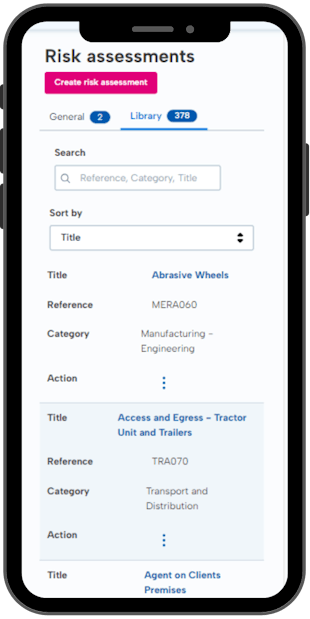
Risk assessments and safety support
Slide Icon
Health and safety support

Designed with heaps of clever tools and features to free up your time.

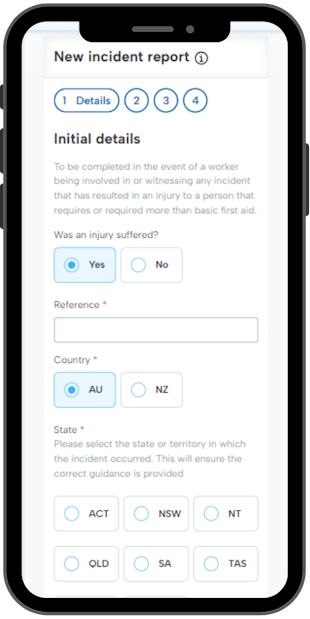
Track and submit workplace incident reports
Slide Icon
Protect your business

BrightHR offers risk management and incident reporting solutions.